
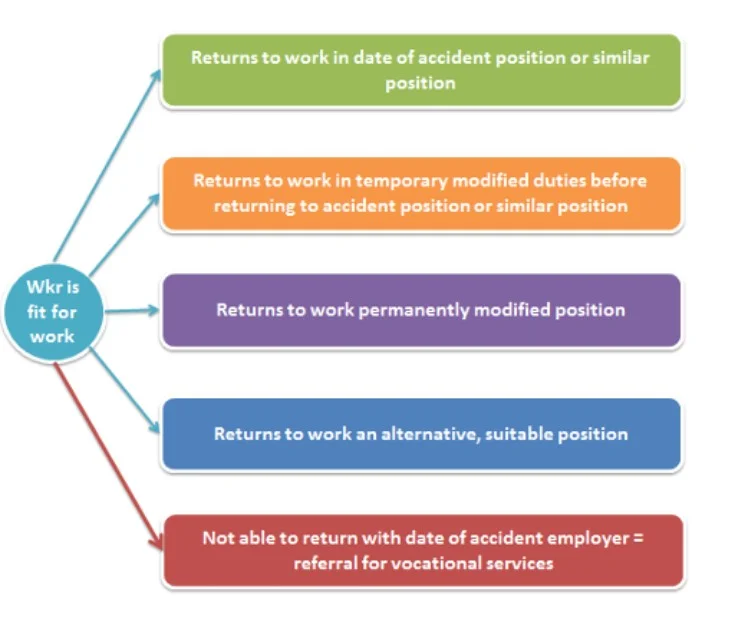
WCB Alberta consistently emphasizes modified work as one of the most effective ways to control premiums. But when they say “create creative modified work opportunities,” what does that actually mean in practice?
This guide breaks down what effective modified work looks like in Alberta workplaces, the practical challenges employers face when implementing it, and where specialized support can help bridge the gap between WCB policy and day-to-day operations.
Why Modified Work Impacts Your Premiums
The connection is direct: keeping injured workers connected to the workplace reduces claim duration, and claim duration is a key driver of your costs. WCB Alberta’s myWCB dashboards now show exactly how your modified work outcomes and lost-time claim duration compare to your industry peers—and these metrics feed into your rate calculations.
Beyond premiums, there’s a workforce retention case: you maintain institutional knowledge, workers recover faster when they stay engaged, and supervisors remain active participants in the return-to-work process. Employers who consistently achieve better outcomes treat modified work as workforce planning, not injury management.
The Three Categories of Creative Accommodation
When WCB uses the term “creative” modified work, they’re asking employers to start with what the worker can do rather than focusing solely on limitations. Here’s what that looks like:
1. Schedule and Time Adjustments
Modified work doesn’t always mean different tasks—sometimes it means different timing:
- Gradual return schedules: Starting with 4-hour days and building to full-time over 2-3 weeks
- Flexible start times: Allowing workers to attend physiotherapy without using vacation days
- Strategic break patterns: Building in extra rest periods for workers managing pain or reduced stamina
- Compressed duty periods: Assigning focused tasks during peak energy hours
Alberta example: A construction worker recovering from shoulder surgery started with 4-hour morning shifts handling site documentation, material ordering, and quality checks. As his range of motion improved, he gradually took on light tool work, returning to full duties after 6 weeks instead of a projected 12-week absence.
2. Job Re-Bundling (Reshaping Roles)
Job re-bundling means breaking apart the injured worker’s original role and reassembling a customized mix of tasks that fit their medical restrictions:
- Removing high-risk tasks and filling time with safer duties from adjacent roles
- Combining tasks from multiple positions into a temporary hybrid role
- Shifting to support functions: training coordination, documentation, quality control, inventory management
- Cross-department assignments: moving someone where demands align with current abilities
Alberta example: A warehouse worker with a back injury couldn’t lift over 10 kg. The employer assigned receiving documentation, new hire safety training, tool inspections, and delivery coordination—tasks previously squeezed into supervisors’ days. When he returned to full duties 8 weeks later, the employer recognized the documentation role added enough value to warrant a permanent light-duty position.
Key insight: many workplaces have “shadow work”—important tasks no one has dedicated time to complete. Modified work can reveal these opportunities.
3. Ergonomic and Workspace Modifications
Small physical changes often make the difference between “can’t work” and “can work safely”:
- Workstation adjustments: Proper chair height, monitor positioning, keyboard alternatives, improved lighting
- Tools and equipment: Lifting aids, carts, lighter tools, adjustable work surfaces
- Layout optimization: Relocating frequently used items within easy reach, reducing unnecessary walking
- Vehicle modifications: Steering aids, backup cameras, adjustable seats
- Environmental controls: Quieter workspaces for cognitive injuries, temperature control for chronic pain
Alberta example: A delivery driver recovering from a knee injury couldn’t safely enter and exit the truck 30+ times daily. The employer installed an attached step stool, adjusted seat height, and temporarily assigned routes with fewer stops. Total cost: under $200. The worker stayed on the job, and the modifications reduced strain for the entire driver pool.
The Planning Piece Most Employers Skip
The most common implementation failure: waiting until someone is injured, then scrambling to figure out modified work under pressure. Employers who consistently succeed pre-plan modified work banks—documented lists of potential tasks that could accommodate various restriction types.
Sit down with supervisors and ask:
- “What tasks do we chronically lack time for?” (documentation, training, preventive maintenance, inventory audits)
- “What could someone do with a 10 kg lifting restriction?” (administrative support, scheduling, quality checks)
- “What could someone do seated or with limited mobility?” (reception, remote monitoring, planning)
- “What tasks could be done with cognitive restrictions?” (repetitive tasks with checklists, physical work with minimal decision-making)
Document 10-15 realistic options and keep them accessible. When an injury occurs, you start with a template rather than improvising. This planning step is where external consultants familiar with WCB expectations and industry-specific demands can help identify options that might not be obvious internally.
The Supervisor Challenge (And How to Address It)
Supervisors often resist modified work because they perceive it as creating extra work—managing restrictions, tracking limitations, worrying about re-injury liability. This is the single biggest implementation barrier.
Reframing helps:
Instead of: “We have to accommodate this worker because WCB requires it.”
Try: “This worker knows our systems and processes. Let’s identify tasks they can safely handle that would help your team. What work do you need done that doesn’t require the physical capabilities they’re temporarily missing?”
When supervisors see modified work as retaining a trained employee rather than managing a liability, resistance decreases. But they need concrete guidance—specific examples of what safe modified work looks like in their operation with their typical injuries.
This is where outside expertise bridges gaps. Consultants who regularly interpret medical restrictions and translate them into workplace-specific modified duties can provide supervisors with concrete frameworks for managing modified work confidently.
Interpreting Medical Restrictions Into Workable Tasks
One of the most common pain points: a doctor’s note says “no lifting over 10 kg, no prolonged standing, no repetitive bending.” Supervisors think, “So… what can they do?”
Medical restrictions describe limitations, not capabilities. Converting restrictions into safe tasks requires understanding both the medical intent and the actual physical demands of your workplace roles. This translation step is where many modified work plans stall.
Questions that help:
- Does “no prolonged standing” mean no standing at all, or 15-minute intervals with seated breaks?
- Does “no lifting over 10 kg” rule out physical work, or can they use carts, team lifts, and lifting aids?
- Does “no repetitive bending” eliminate warehouse work, or can tasks be restructured to minimize floor-level work?
Getting this translation right requires familiarity with how WCB interprets functional capacity and how medical professionals document restrictions. Many employers benefit from having someone who regularly works with both WCB policy and medical documentation review their modified work plans.
Connecting Modified Work to Your WCB Data
WCB Alberta’s myWCB portal now provides specific metrics on your modified work performance:
- Modified work outcomes: How often injured workers successfully return to modified duties compared to your industry
- Lost-time claim duration: How long your claims stay open compared to peers
- Return-to-work performance: Overall success rate getting workers back to work
These metrics directly impact your premium calculations. Employers who underperform on modified work outcomes see this in their rates. Employers who excel see premium reductions.
The challenge: myWCB shows you what the data is, but interpreting why your numbers look the way they do and how to improve them requires combining data with knowledge of your actual practices and WCB’s evaluation criteria.
Data analysis support becomes valuable here. Reviewing your dashboard alongside someone familiar with WCB’s benchmarking methodology can reveal whether challenges are systemic (you need better processes), situational (specific injury types you’re not handling well), or documentation-related (you’re doing modified work but not capturing it properly).
Where External Consulting Support Fits
Employers who get the best results with modified work plan ahead, give supervisors concrete frameworks, and connect their practices to WCB’s data and expectations.
External consulting support helps in specific ways:
Building Modified Work Banks: Identifying 10-20 pre-planned accommodation options for common restrictions. This is industry-specific work—what works in construction differs from healthcare—and benefits from outside perspective on overlooked tasks.
Interpreting Medical Documentation: Translating doctor’s restrictions into specific job tasks supervisors can confidently assign. This requires understanding both WCB policy and functional capacity assessment.
Supervisor Training: Coaching team leads on productive modified work conversations, temporary job re-bundling, and WCB documentation. Supervisors benefit from learning what works across different industries.
Claim File Reviews: Auditing recent claims where modified work could have been offered but wasn’t, or was offered but didn’t succeed. This reveals patterns—specific injury types you struggle with, documentation gaps, supervisor knowledge gaps.
Connecting Practices to WCB Data: Analyzing your myWCB performance indicators alongside your actual return-to-work processes to identify why your numbers look the way they do and which specific changes would improve outcomes.
The goal of external support isn’t to take over modified work management—that stays with your supervisors and HR team. The goal is to build your internal capacity so your team can handle modified work confidently and effectively, with outside expertise used periodically to refine processes or troubleshoot challenges.
The Wrap: Modified Work as a System, Not a Reaction
Employers who see real premium reductions from modified work don’t treat it as something you figure out after an injury happens. They treat it as a system: pre-planned options, trained supervisors, clear processes for interpreting restrictions, and regular review of WCB performance data.
Building that system takes initial effort, but once it’s in place, modified work becomes a routine part of how you manage workplace injuries rather than a source of stress and uncertainty. And when WCB says “create creative modified work opportunities” in their premium guidance, you’ll know exactly what that means and how to deliver it in your workplace.